- HR Brain Pickings
- Posts
- 🧠 Should therapy be part of the workplace?
🧠 Should therapy be part of the workplace?
A growing number of companies are testing onsite therapy as part of their wellbeing strategy.
Hey HR folks!👋
Hope your week is going fantastic!
Let’s talk about something HR has been trying to solve for years… and still hasn’t quite cracked 🧠
Employees are stressed, burned out, and not really using the mental health benefits you already offer. So now some companies are trying a bold fix.
They’re bringing therapy directly into the workplace. In today’s edition, we’re getting into what happens when mental health support moves from a benefits portal into the office, and whether this actually solves the real problem or just changes where it shows up.
Today’s edition is presented by SelectSoftware Reviews
A few years ago, as the company started growing, I realized it was time to invest in proper HR software. I began looking into the basics like an HRIS to manage employee data, payroll software to run payroll, and an ATS to speed up hiring. But...
🙍♀️ Every category had dozens of vendors.
🤦♀️ Every platform claimed to do everything.
🤷♀️ Every “top tools” list online looked completely different.
And when you’re an HR team of one, you don’t exactly have time to sit through calls with different vendors.
Around that time, someone recommended SSR’s HR software matching service to me. The interesting part was that it was completely free, so I figured there was no harm in trying it. 🤷
I shared a few details about the company, what I needed help with, and the budget. Soon after, I received personalized HR software matches and introductions to those vendors.
Just like that, my options went from hundreds of tools to 2–3 that actually made sense for the situation. Reviewing them and making a decision suddenly felt so much more manageable! 😮💨
Honestly, I now recommend it to any HR team of one facing the same challenge of finding the right software. Even if your team is a bit larger, it can save you a lot of time. And since it’s free, there’s really not much to lose.
👇️ Coming up
In today’s edition
🧠 So we’re doing therapy at work now?
🛋️ The break room: Would employees use onsite therapy if it were offered?
📚 Human readsources: Atlassian, Ford, and Meta face fresh workplace controversies around conduct, culture, and AI-driven change
💭 Opening thoughts
🧠 So we’re doing therapy at work now?

Here’s the real uncomfortable question: If employees already have access to mental health support… why aren’t they using it? 🤔
Because access on paper and access in real life are two very different things.
Between wait times, cost, stigma, and plain old inertia, a lot of employees never make it to that first session. Meanwhile, stress keeps showing up in performance reviews, missed deadlines, and disengaged teams.
So HR teams are starting to rethink the model.
Instead of asking employees to go find help, what if help showed up where they already are?
That’s where onsite therapy enters the chat 🛋️
For easy reading
🧠 Let’s unpick
On paper, this feels like a no-brainer.
Employees are struggling. Bring support closer. Problem solved.
And to be fair, the early signals are strong.
One example comes from AT&T. The idea is simple. Reduce friction. ⬇️
Workers at the company’s Dallas headquarters logged more than 2,100 visits to an onsite therapist in 2025.
The service is averaging more than 11 visits per day, showing that employees engage when support is easy to access during the workday.
The program has grown quickly. AT&T currently operates 10 onsite therapy clinics across offices and call centers in the U.S., with plans to expand to 20 locations. 🏢
Employees can book appointments during the workday and receive up to 16 no-cost therapy sessions through the program, with additional sessions available through their medical plan. ⚕️
Let’s zoom out for a second. 🔍️
This is a bigger shift in how organizations think about mental health. Because the problem is already hitting the business.
61% of U.S. workers report declining productivity due to mental health issues, according to research cited by TELUS Health.
Anxiety and isolation are also rising, affecting 28% and 27% of workers respectively.
Right now, HR is stuck holding two truths at once:
👍️ Employees need support.
🤷 Employees don’t always trust employer-provided support.
Onsite therapy removes logistical barriers. No commute, no waitlists, no “I’ll do this later” spiral. But it introduces new considerations. 🤔
“Is this actually private?” 👀 Even with licensed external therapists, employees can feel uneasy opening up in a space tied to their employer.
Add scale to the mix. One therapist, hundreds or thousands of employees. That math starts looking… ambitious.
So now HR has a design problem, not just a benefits problem.
It’s not about offering therapy, but rather creating a system employees trust enough to use. And that’s a much harder job.
You can read more at...
🎬 Lights, camera, action!
Takeaway (and try this 👇)
🧠 Reduce access friction
Employees are far more likely to use mental health services when support is easy to access during the workday.
📊 Track usage and outcomes
Monitor appointment volume, satisfaction scores, and productivity indicators to understand program impact.
🔐 Build trust through confidentiality
Clearly communicate how therapy sessions remain private and separate from employer oversight.
👩💼 Train managers to guide employees to support
Employees may turn to their managers if they are struggling with stress or burnout.
📣 Improve visibility of mental health benefits
Many employees remain unaware of the resources available to them. Consistent communication increases utilization.
👀 Too long didn’t read
TLDR
Some employers are experimenting with onsite therapy programs to make support easier to access. Early results show strong employee engagement when services are convenient and confidential. For HR leaders, the focus now shifts to designing mental health programs employees will actually use.
☕The break room
What’s your take?
Would your employees use onsite therapy if it were offered at work? |
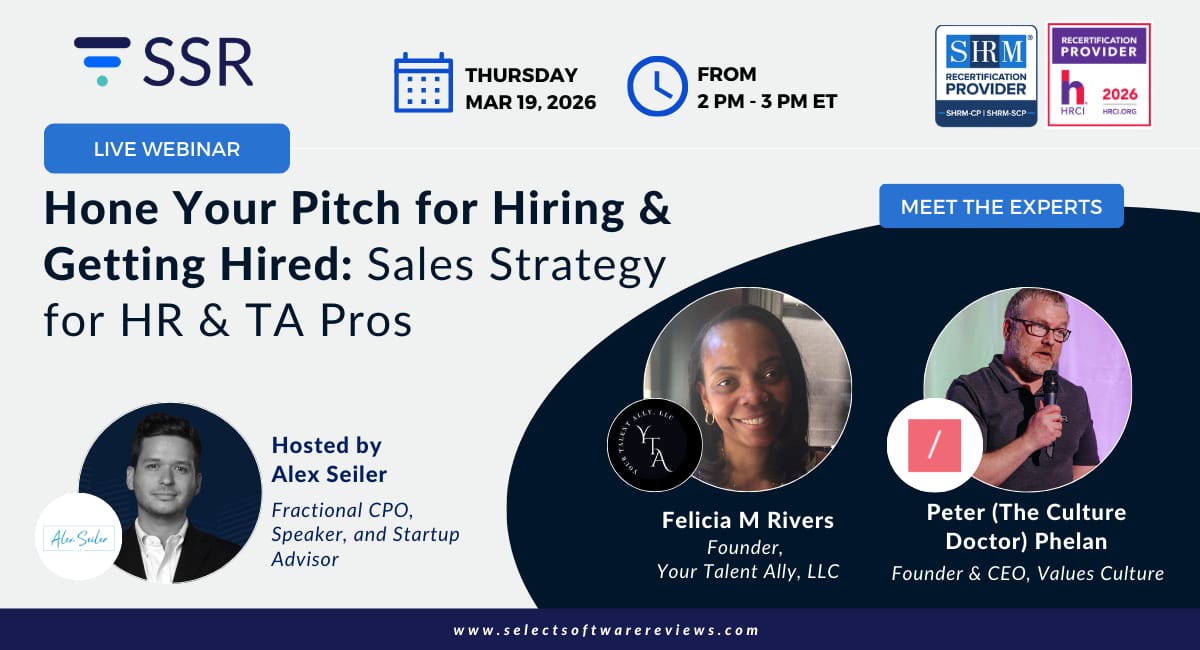
In this practical, insight-driven session, we’ll explore how core sales principles can elevate your effectiveness across every stage of the talent lifecycle.
From crafting a compelling pitch to passive candidates, to influencing stakeholders who are resistant to change, to positioning your own experience for your next career move, you’ll learn how to communicate value with clarity and confidence.
📚 Additional reading
Human Readsources
Atlassian says it had right to fire engineer for suggesting CEO is ‘rich jerk’
Ford slapped with new harassment lawsuit at Chicago plant with troubled past
Is Meta planning layoffs in 2026? The rumors say AI remains a top priority
That’s it for today.
Thanks for reading to the end and we hope today’s edition sparked some new ideas for your workplace! 🧠
We know you’re super busy and really appreciate you saving some room for us in your inbox 😀
On a scale of 1 to HR, how much do you like this edition? |
Reply