- HR Brain Pickings
- Posts
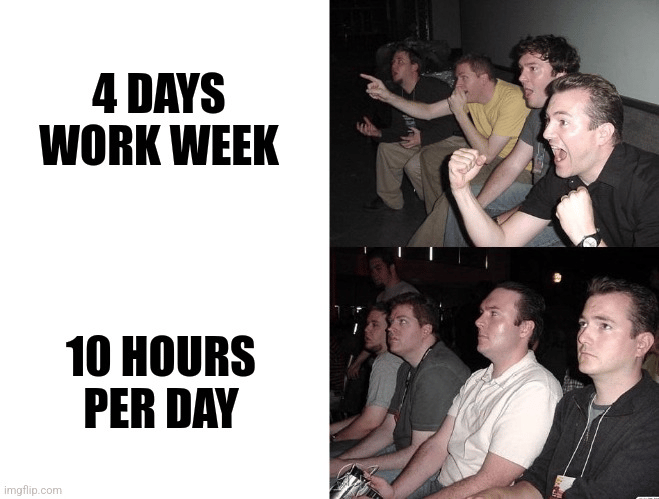
- Everyone wants a 4 day workweek, but..
Everyone wants a 4 day workweek, but..
real results depend on redesigning work, not just cutting a day.
Howdy HR friends!👋
Hope your inbox is behaving today!
The 4-day workweek has been showing up more often in real organizations, real policies, and real leadership conversations. Some teams are thriving with it. Others are realizing pretty fast that squeezing five days of work into four might just create louder burnout.
In this edition, we’re digging into why 2026 is shaping up to be a turning point for the 4-day model, what’s actually working (and what’s falling apart), and how HR can lead this shift.
Today’s edition is presented by SelectSoftware Reviews
Between employee engagement, performance reviews, compliance, hiring, and supporting managers, HR leaders already have plenty on their plates. Turning HR software evaluation into another research project just isn’t realistic! 😢

That’s exactly what SSR’s HR software matching service is designed for.
How it works
🗣️ Share a few details about your team, goals, and challenges
🧑💼 Speak with an HR tech expert who helps you narrow down your options
✅ Get matched with HR software vendors that aligns with what you’re trying to solve
It’s built for busy HR teams who need direction, not another item on their to-do list.
👇️ Coming up
In today’s edition
🔄 So… is the 4 day workweek actually working?
🛋️ The Break Room: What's your organization's stance on the 4-day workweek heading into 2026?
📰 Human Readsources: Amazon cloud division faces layoffs, H-1B visa policy changes, and AI trade secrets theft case developments."
💭 Opening thoughts
🔄 So… is the 4 day workweek actually working?

The four-day workweek isn’t new, and has been around since the 1970s, picked up serious momentum after 2020, and has already been tested by hundreds of companies across the U.S., Canada, Europe, Australia, and the UAE 🌍
Some of the biggest pilots so far covered more than 900 employees across 33 businesses in the U.S. and Ireland using the 100-80-100 model 📊 Not one of those companies went back to five days. In fact, 93% said they’re sticking with it or planning to. Iceland has already moved at scale, with 86% of workers now on reduced hours or having the right to be 🇮🇸
Closer to home, the shift is picking up speed. 20% of U.S. employers already run on a four-day week, and another 41% say they plan to try it at least temporarily. More than half of U.S. employers now say they’re open to experimenting with the model 👀
For easy reading
🧠 Let’s unpick
So what separates the teams that make a four day workweek work from the ones that struggle?
It comes down to productivity 📈
Moving to four days at full pay requires roughly a 25% efficiency gain. That doesn’t happen by working harder. It happens by changing how work gets done.
Organizations seeing positive results are redesigning workflows, not calendars 🗓️ In practice, that looks like:
Ruthlessly cutting low value tasks ✂️
Shrinking or cancelling unnecessary meetings 🧹
Clarifying priorities and decision rights 🎯
Tightening handoffs between teams 🤝
Reducing duplicated effort 🔁
One company that transitioned about 100 employees found this out the hard way. While morale and loyalty improved, new hires arriving from traditional workplaces brought habits like long meetings and unclear priorities. Without unlearning those patterns, compressing five days into four led to lost efficiency ⚠️
There’s also healthy skepticism around the data 🤔 Critics point out that many trials rely on self reported performance, involve highly motivated participants, or run for limited periods. That makes it harder to prove long term productivity gains at scale. Economists warn that rolling this out without real process change could deepen existing productivity challenges.
Meanwhile, AI and automation are accelerating this conversation 🤖 Business leaders are predicting even shorter workweeks as technology absorbs routine tasks. That’s pushing more organizations to experiment now, not later.
Bottom line: the four day workweek is an operating model, 🛠️ and whether it succeeds depends almost entirely on how willing companies are to challenge habits, redesign work, and tie flexibility to performance.
You can read more at...
🎬 Lights, camera, action!
Takeaway (and try this 👇)
If you’re in early discovery mode, here are practical ways to start exploring the 4 day work week operating model:
🧭 Run a time audit with one team. Map where hours actually go today: meetings, approvals, rework, handoffs. This gives you a baseline before anyone starts talking about dropping Fridays.
🧪 Pilot process changes before schedule changes. Try cutting recurring meetings, tightening priorities, or clarifying ownership first. See what productivity looks like when friction is removed.
🏁 Experiment with outcome based expectations. Shift one team from activity tracking to clear deliverables and timelines. This mirrors how many pilots treat flexibility as performance linked.
🧠 Sense check manager readiness. Shorter weeks depend heavily on prioritization, decision making, and workload planning. Use small experiments to see where managers need support.
🔄 Watch for legacy habits. Long meetings, duplicated effort, unclear priorities. These show up fast in pilots and quietly kill momentum if left untouched.
👀Too long didn’t read
TLDR
The 4-day workweek is practically at HR's doorstep with 93% of companies sticking with it after trying it. At some point, you may be either implementing your strategic 100-80-100 model or explaining why your competitors are stealing all your best talent with an extra day off.
☕The break room
What’s your take?
What's your organization's stance on the 4-day workweek heading into 2026? |
📚 Additional reading
Human Readsources
📉 Amazon Cloud Layoffs Leaked in Mistaken Email (CNBC) - Amazon cloud unit memo accidentally reveals planned layoffs.
🌎 Trump Visa Policies Reshape Employer Hiring Strategies (HR Executive) - Trump's immigration policies create challenges for employers hiring foreign talent.
📄 Google Engineer Convicted in AI Espionage Case (HCA Mag) - Ex-Google engineer guilty of stealing AI secrets for China
That’s it for today.
Thanks for reading to the end and we hope today’s edition sparked some new ideas for your workplace! 🧠
We know you’re super busy and really appreciate you saving some room for us in your inbox 😀
On a scale of 1 to HR, how much do you like this edition? |
Reply